How to Launch a Product in 7 Days: GTM Checklist | Tomako
Blog content updates automatically
How to Launch Your Product in 7 Days: A Realistic GTM Checklist
A product launch is more than an announcement. Use this guide to decide what to say, build the path to action, reach the right people, and learn what to change next.
To launch a product, first decide who it is for, what outcome you can prove, and what action you want that person to take. Then build the path from the launch message to that action, prepare the people and channels that will carry the message, and review what users actually do after you publish.
Use this guide for a working SaaS product, digital product, or focused beta. If the core product is not usable yet, the audience is unknown, or nobody can answer users during launch week, extend the timeline before making a public announcement.
The five parts of a product launch
Most weak launches do not fail because a team missed one social post. They fail because a decision in one stage was never made: the audience is too broad, the proof does not match the claim, the next action is broken, or no one owns the response.
Stage
Decide this
Good enough before you continue
Launch strategy
Who is the first audience and why should they care now?
READY WHEN YOU ARE
YOUR PRODUCT.
READY TO MOVE.
Bring your product context into Tomako, then turn a guide, an idea, or a decision into work you can continue.
What happens in what order, with which owner and risk?
One goal, a sequence, named owners, and channel choices
Readiness
Can a visitor understand, try, and complete the next action?
A tested path, useful proof, and honest answers
Execution
Where will you announce and how will you respond?
Channel packages, current rules, and reply coverage
Learning
Which evidence changes the next decision?
A measurement source, review time, and next experiment
The sections below explain how to complete each part. The seven-day version comes later, after you can see the full launch plan.
1. Set your product launch strategy
A launch strategy is the set of choices behind the release. It answers: who is this launch for, what problem is urgent enough to act on, what can the product prove today, and what outcome matters this time?
Start with a one-page launch brief. Keep it specific enough that another teammate could use it to review the landing page or reply to a question.
Brief field
What to write
Weak version
Useful version
First audience
The smallest reachable group with the problem
“Founders”
“Solo SaaS founders still tracking partner outreach in spreadsheets”
Current alternative
What they do without this product
“They need a better tool”
“They collect contacts, notes, and follow-ups in separate sheets”
Product promise
A result the current product can show
“The best AI tool”
“Turn a product URL into a structured launch-work checklist”
Primary action
The one next step this launch should produce
“Get awareness”
“Start a trial and complete the first core action”
Non-goal
A claim you will not make yet
Leave blank
“We are not claiming to replace a full marketing team”
How to make the strategy credible
Use language from real conversations, support requests, product feedback, and the alternatives users already use. A promise should describe an outcome someone can see in the current product—not a future roadmap or a broad category label.
Pick one primary result for this launch. It might be qualified waitlist signups, activated beta users, trial starts, purchases, or relevant conversations. Supporting signals are useful, but they should not replace the main result.
You are ready to continue when a teammate can explain the audience, problem, promise, and first action without adding a new claim. If the description keeps expanding, narrow the audience or promise before creating more assets.
2. Build a product launch plan
A strategy explains the choices. A product launch plan turns those choices into work that can be completed and reviewed.
Do not begin with “post everywhere.” Start with the route a person takes from first hearing about the product to completing the action you care about. Then name the people, dependencies, and risks that can break that route.
Plan field
What to decide
Good-enough standard
Outcome
The primary action and review date
One action is more important than traffic alone
Message
The audience, problem, promise, and proof
Every claim can be demonstrated or explained honestly
A real person can complete it from start to finish
Channels
Where the first audience already pays attention
A small set chosen for audience fit and response capacity
Owners
Who prepares, publishes, replies, and fixes issues
Each dependency has one named owner
Risks
What would make you pause or delay
Broken access, missing proof, unanswered policy questions, or no reply coverage are visible before launch day
Separate strategy from schedule
You may have a seven-day launch plan, a two-week plan, or a longer beta runway. The length changes the pace, not the underlying work. If the product path or positioning is unresolved, shortening the calendar only hides the problem until users find it.
You are ready to continue when everyone can see the same plan: the goal, launch path, channels, owners, key dependencies, and the conditions that would delay publication.
3. Make the product and launch assets ready to convert
People do not experience your launch plan. They experience the product page, the proof you show, the CTA they click, and what happens next.
Build a small evidence kit around the promise. Its job is to answer a reasonable visitor's questions without asking them to trust vague marketing copy.
Asset
What it must do
Check it this way
Landing page
State the audience, outcome, proof, boundary, and one next step
Ask someone outside the team what the product does after 30 seconds
Demo or screenshots
Show the promised result in the real product
Use the core flow, not decorative screens
CTA and confirmation
Describe the real action and what follows
Test signup, checkout, download, or booking with a non-admin account
Onboarding path
Help a new person reach the first useful moment
Confirm the first-use step is obvious and reachable
FAQ and reply notes
Answer access, price, privacy, limits, and support questions
Remove answers that depend on invented policies or future features
Test the path, not only the copy
Run the full journey on desktop and mobile: open the link, read the page, take the CTA, receive the expected confirmation, and reach the first product action. Check every redirect, email, form, and support route that the launch message relies on.
Do not fill missing proof with placeholder logos, invented testimonials, or claims that the product cannot show. A precise limitation is more useful than false certainty.
You are ready to continue when a person who did not build the product can understand the value, complete the intended action, and see what happens next.
4. Prepare measurement, QA, and launch operations
Measurement is not a dashboard you open after the launch. It is the agreement you make before publishing about what will count as evidence.
For each goal, record the source of truth and who will inspect it. Keep the set small enough to use.
If the goal is…
Look for…
Review with…
Waitlist quality
Qualified signups and useful replies
Source, landing-page conversion, and reply themes
Beta learning
Users who reach the first core action
Activation path and feedback completion
Paid validation
Purchases or trial starts
Checkout/trial event and early activation
Community learning
Relevant discussion, not raw impressions
Repeated questions, profile visits, and qualified follow-up
Before publication, test analytics events, controlled link labels, mobile rendering, images, forms, confirmation states, and support contact details. If search discovery is part of the plan, check the page's title, description, canonical URL, internal links, and sitemap process. A sitemap can support discovery; it does not promise immediate indexing or traffic.
You are ready to continue when the team can answer three questions without rebuilding the story later: where did a visitor come from, did they complete the intended action, and who handles a broken path or serious question?
5. Distribute and launch as a conversation
Choose channels because the first audience is already there and because you can respond there—not because a generic checklist says every launch needs the same platforms.
Channel type
Use it when
Adapt the message
Prepare before publishing
Existing audience or email
People already know the problem or your work
Lead with what changed and who it helps
Segment, one CTA, and a reply owner
Community discussion
The community genuinely discusses this problem
Offer useful context and ask for relevant feedback
Read current rules and disclose your connection
Partner or customer outreach
You have a relevant relationship and clear reason to contact them
Personalize the problem, proof, and ask
A short message, follow-up rule, and no-pressure exit
Launch platform
The product matches that platform's audience and format
Use its required assets and community norms
Current requirements, reply coverage, and a working destination
Prepare a short announcement, a longer explanation, and a reply bank. The short version should name the user problem, show the product result, and offer one next step. The longer version can explain the trigger, tradeoffs, and what you want feedback on.
Read each community's rules on the day before you post. Do not disguise promotion as a neutral discussion. A launch creates better evidence when people can ask honest questions and receive honest answers.
You are ready to publish when every chosen channel has a working link, a message that fits its context, and a named person who can reply during the launch window.
6. Use this product launch checklist before you publish
This checklist is a compact review of the method above. It is not a replacement for the strategy or plan.
The first audience, problem, promise, and non-goal are written down.
The primary conversion action and measurement source are chosen.
The plan names milestones, owners, channels, dependencies, and pause conditions.
The product, landing page, CTA, confirmation, and first-use path work end to end on desktop and mobile.
Demos, screenshots, FAQ, and support notes match the product that exists today.
Links, tracking, metadata, and relevant platform or community rules have been checked.
Channel-specific announcements and response coverage are ready.
A post-launch review time and next-decision owner are booked.
Need a more structured, scored review? Use the free GTM Readiness Checklist to assess positioning, assets, channels, measurement, and iteration before you set a launch date.
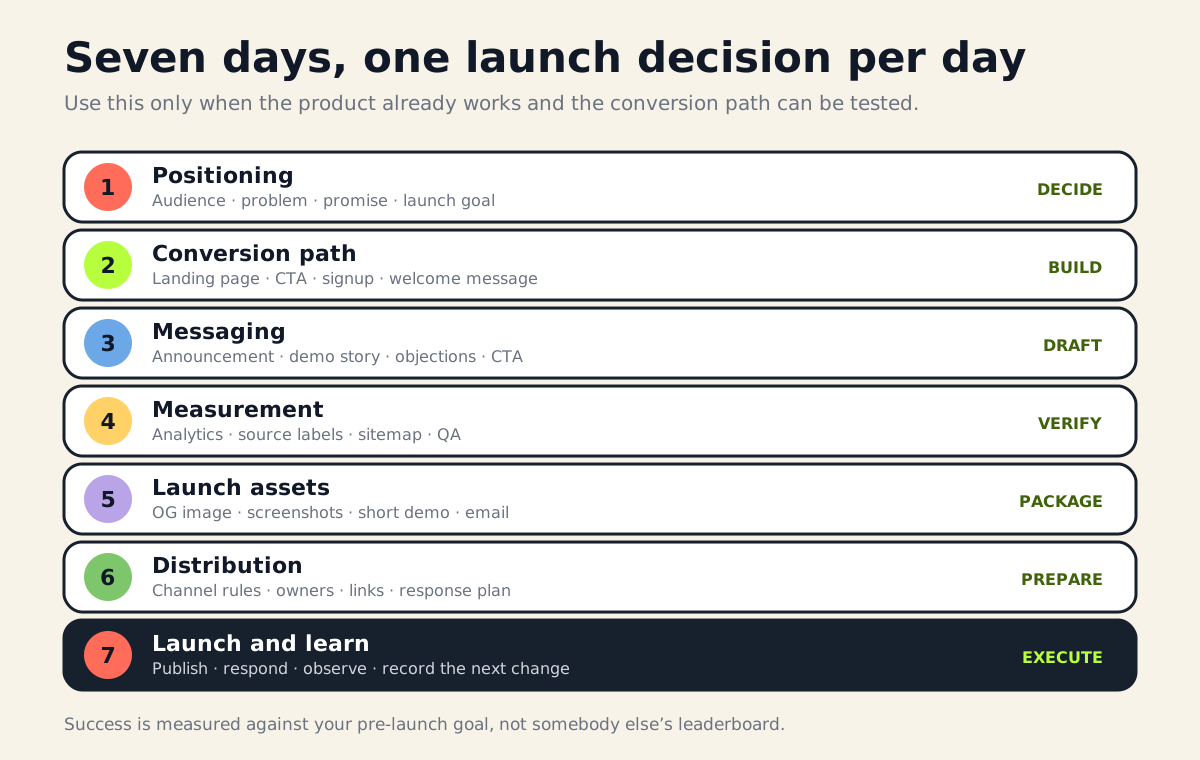
7. Turn the method into a seven-day launch plan
The title's seven-day framing works when the product already functions, the team has a credible audience hypothesis, and someone can answer users. It is a coordination sprint—not a promise that every product should be launched in one week.
Day
Complete this stage
Deliverable
Do not move on until
1
Strategy
Audience, problem, promise, goal, and non-goal
The claim is demonstrable and the next action is clear
2
Plan
Milestones, owners, channels, dependencies, and risks
Each important dependency has an owner and a pause condition
3
Assets
Landing page, proof, CTA, onboarding, and FAQ
An outside person completes the core path
4
Operations
Tracking, link labels, QA, and reply route
You can read the signal and respond to a failure
5
Distribution
Channel packages and publishing plan
Rules, links, and response coverage are confirmed
6
Rehearsal
A small-audience test and correction list
Material confusion or path failures are fixed or explicitly deferred
7
Release and review
Publish, response log, and review appointment
The next experiment has an owner and date
If Day 2 reveals that the promise is unclear, do not pretend that Day 3 assets will solve it. Return to the strategy. If Day 5 reveals no one can support a channel, remove it. The schedule is useful because it makes these decisions visible early.
Optional: launching on Product Hunt
Product Hunt is one channel, not the default definition of a product launch. If it is appropriate for your audience, prepare accurate copy, real product visuals, and a maker who can reply. Use Product Hunt's current preparation guide for its changing asset and submission requirements rather than relying on a copied checklist.
8. Review the launch and choose the next move
The launch is not finished when the post goes live. Review the outcome against the goal you chose before launch.
Separate the evidence into four groups:
Reach: Which sources brought the intended audience?
Action: Did people complete the primary conversion action?
Understanding: What did people repeat back correctly, and where were they confused?
Friction: Which broken paths, objections, or missing proof stopped progress?
Do not rewrite your positioning because of one comment or a few hours of low traffic. Look for repeated signals, then choose one proportional next step: revise the message, improve a conversion step, follow up with a qualified group, test another channel, or pause an activity that does not fit the audience.
A useful launch review ends with a decision, not a vague retrospective: keep, change, or pause; one owner; one next date.
Frequently asked questions
Can I launch a product in seven days if it is not finished?
Usually, no. Seven days can organize a launch for a working product or focused beta. If the core value, access path, audience, or support plan is still unresolved, use more time to fix those foundations before making the release public.
What should a product launch plan include?
It should include a primary outcome, the first audience, message and proof, the product path to one CTA, selected channels, owners, dependencies, risks, measurement sources, and a post-launch review. A calendar without those decisions is only a task list.
What is the difference between product launch strategy and a launch plan?
Strategy explains the choices: who you are trying to reach, what problem you solve, what promise you can prove, and why the launch matters. The plan turns those choices into milestones, assets, channels, owners, and timing.
Which channels should I use for a first product launch?
Start with the smallest set of channels where the first audience already spends attention and where you can answer questions. An existing email list, a relevant community, partner outreach, or a launch platform can each work when the message, audience, and support capacity fit.
How do I know whether a product launch was useful?
Judge it against the goal you set before launch and the evidence it produced. Useful evidence can be qualified activation, purchases, repeated questions, conversion friction, or a clear reason to change the message or channel. Attention alone is not enough.
Is Product Hunt necessary for a product launch?
No. It can be useful for products that fit its audience, but it is one distribution option. Choose it only when the audience, assets, and ability to respond make it a good fit for your launch goal.
Related tools
Continue with a tool for the next decision or task in your workflow.
Tiny is a co-founder of Tomako, working across the full path from growth strategy to channel execution. His experience spans influencer marketing, affiliate marketing, SEO/GEO, and paid acquisition. As an indie maker and creator, he is especially interested in how small teams can make better growth choices with limited resources. On the Tomako Blog, he writes about channel decisions, practical execution, and lessons from building and growing products.
 Tiny
Tiny