AI Competitor Analysis Tool
Enter a public competitor URL to build a sourced profile with confidence and unknowns shown for every major finding.
When to use it
Before rewriting your homepage, pricing, or cold-start copy, see how a rival positions and who they target.
Before building a competitor, alternative, or vs page, confirm the real comparison and the actual differences.
How to analyze a competitor
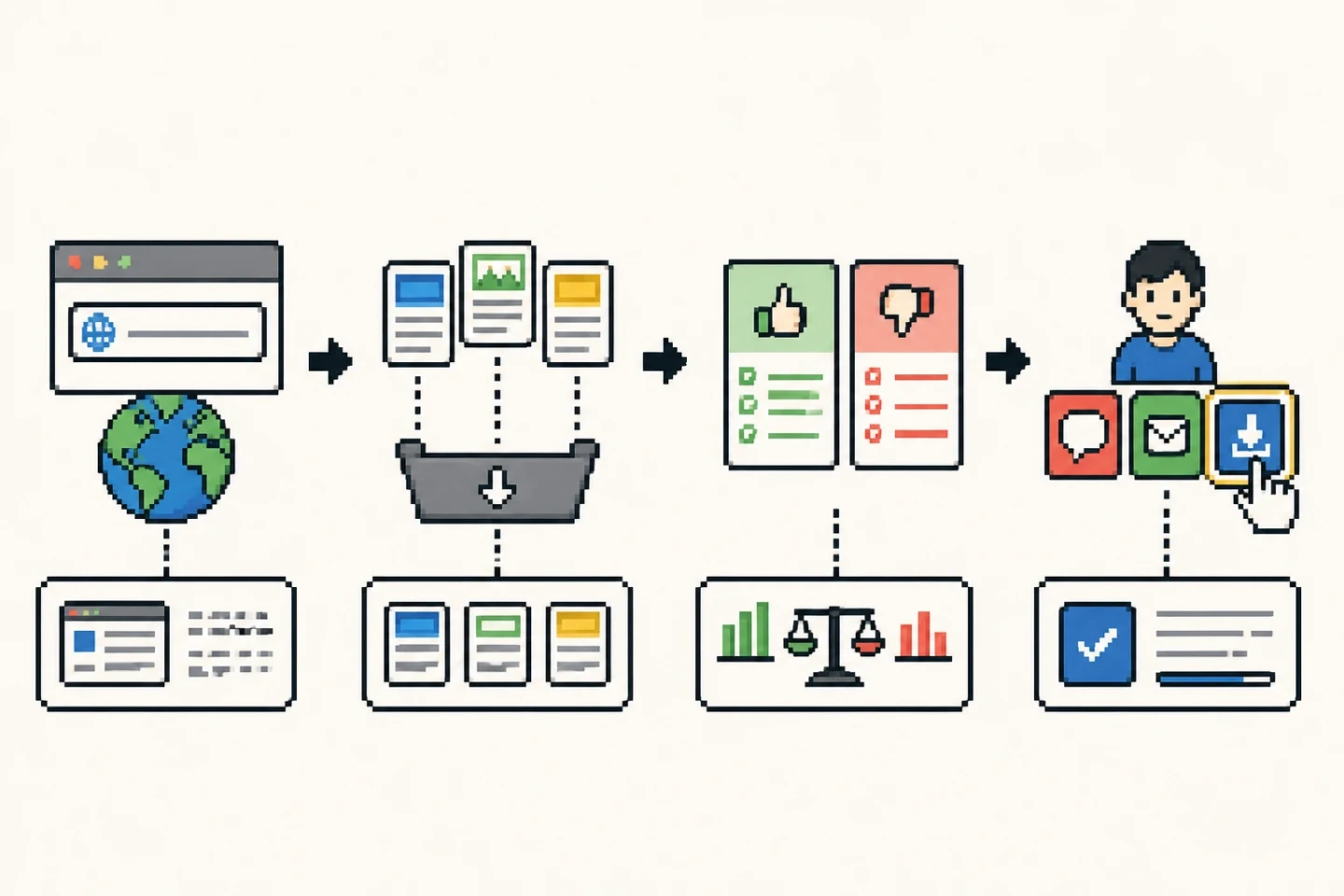
Paste the competitor's public website URL; optionally add a name and the dimensions you care about.
An online research workflow reads the site and searches public signals for traffic, scale, team, and funding.
Results come back as a structured profile — each dimension shows confidence and degrades instead of inventing data.
Start with the overview and traffic trend, then turn “Positioning & openings” into your own positioning, pricing, or channel hypotheses.
What you get and how to read it
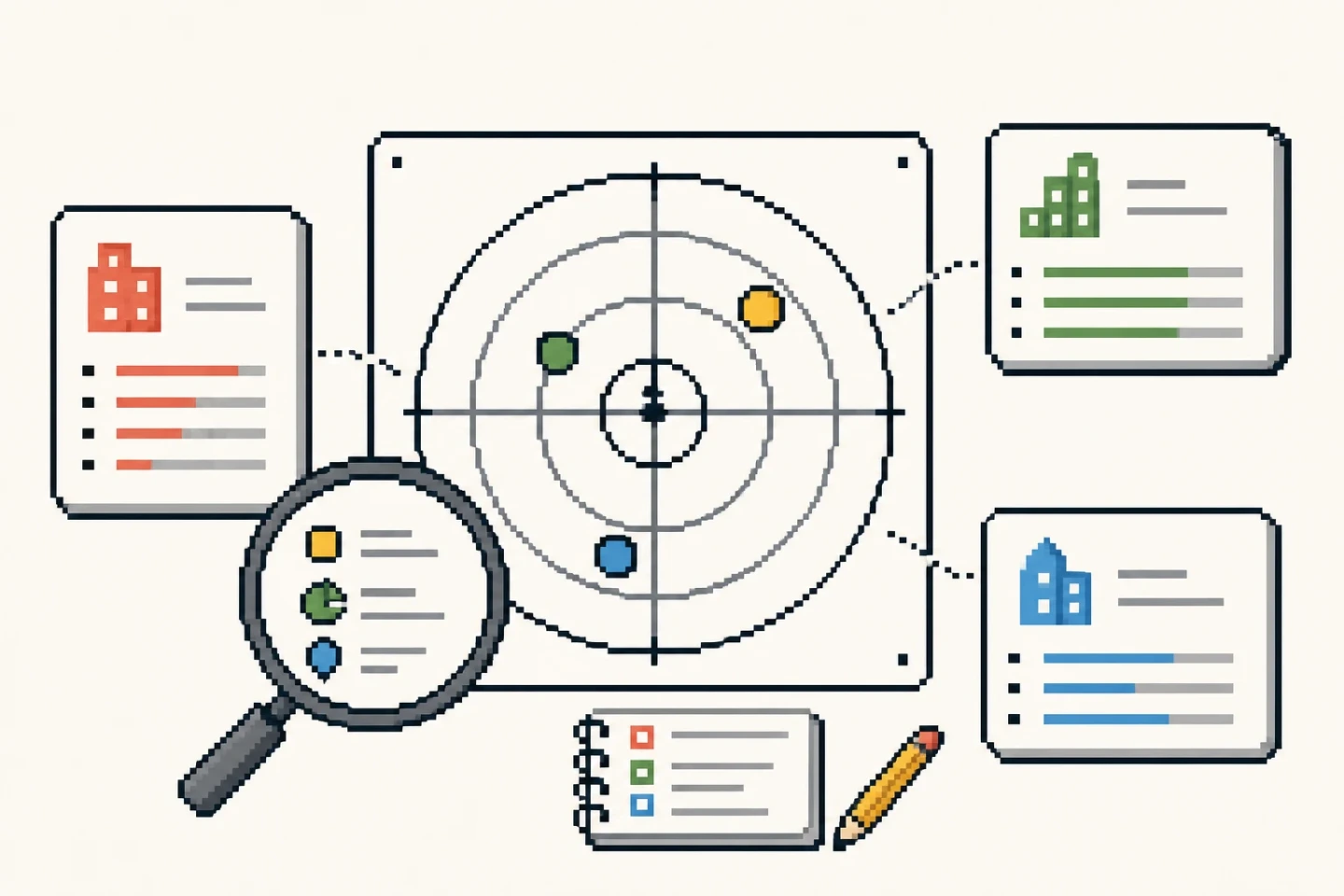
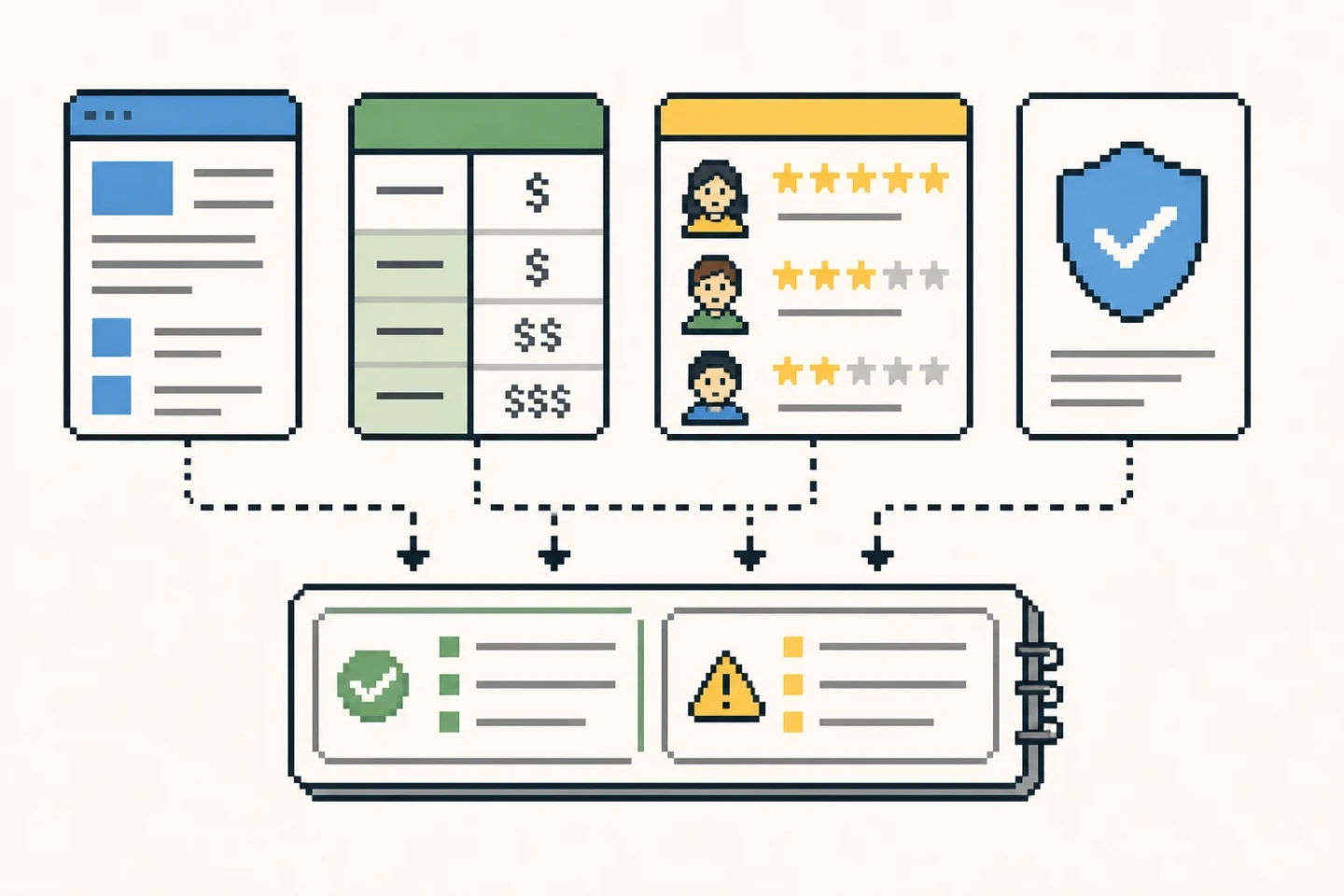
The profile separates product and positioning, estimated traffic, business scale, team, funding, openings, sources, and unknowns.
Confidence sets the weight: low is a lead, medium is a working reference, and high is a stronger public-evidence signal that still needs cross-checking.
Traffic direction can suggest momentum, but seasonality and measurement gaps can distort it; do not treat growth as proof of mindshare.
Business scale and funding are estimates that can suggest resource differences, not verified budgets or execution capacity.
“Your openings” are action items: turn them into homepage positioning, pricing, a key feature, or a launch channel.
Capability boundaries
Estimates from public info only — not official real-time data.
For obscure or low-footprint competitors, some dimensions may be empty.
Cross-check high-impact decisions with multiple sources and human review.

How to analyze a competitor
Frequently asked questions
Enter a public competitor URL to build a sourced profile with confidence and unknowns shown for every major finding.
Is the data real?
It's an estimate from public web and search, not official real-time data. Traffic, revenue, and funding may be outdated or missing, so every dimension shows a confidence level.
What do I need to enter?
Just the competitor's public website URL. Optionally add a name and the dimensions you care about to focus the result.
Does it access private or logged-in pages?
No. The research workflow reads public pages and public search results only — it does not crawl private, authenticated, or paywalled content.
What should I do with the result?
Use the items in “Your openings” to adjust positioning, pricing, a key feature, or a launch channel — and cross-check high-impact decisions against multiple sources.