The short answer: there is no universal best influencer marketing platform. Choose Shopify Collabs for a simple Shopify affiliate program, Modash for self-serve discovery, HypeAuditor for deeper audience vetting, GRIN or Upfluence for established ecommerce operations, Sprout Social for connected social work, CreatorIQ for enterprise governance, and Tomako when creator opportunities need to become outreach and follow-up.
The comparison below puts those eight routes first, then shows how each platform finds creators and how to test shortlist quality, workflow, total cost, AI, and influencer marketing ROI with one campaign brief.
Quick picks
Best for creator opportunities and execution: Tomako
Best for self-serve ecommerce teams: Modash
Best for audience quality and fraud analysis: HypeAuditor
Best for AI-supported DTC operations: GRIN
Best for Shopify affiliate campaigns: Shopify Collabs
These are not universal rankings. A lightweight Shopify affiliate program and a global creator operation have very different requirements.
Editorial method: Product capabilities and public prices were checked on August 26, 2026. This is an editorial comparison based on public evidence, not a claim that every paid plan was tested under identical account conditions. Verify current limits, custom quotes, and private integrations in your own trial.
Best influencer marketing platforms compared
Platform
Best for
Discovery
Workflow
AI
Price
Tomako
Creator opportunities and execution
Creator signals, leads and KOL/KOC shortlisting
Outreach materials and follow-up ToDos
Proactive AI CMO
Tiered plans; check current access
Modash
Self-serve ecommerce teams
Large public-profile coverage and audience data
Outreach, tracking, payments and Shopify
AI-assisted search
From $299/month billed annually
HypeAuditor
Audience quality and fraud analysis
Deep audience and account analysis
CRM and campaign tracking
AI search and analysis
From $299/month billed annually
GRIN
DTC creator programs
Creator discovery and network access
Outreach, activation and relationships
Gia AI operator
Paid plans from $200/month
Shopify Collabs
Shopify affiliate campaigns
Creator recruitment and applications
Gifting, codes, commissions and payments
Workflow automation
Free to install; payout fee may apply
Upfluence
Ecommerce and affiliate operations
Creator discovery and data
CRM, outreach, payments and analytics
Jaice AI capabilities
Custom quote; annual commitment
Sprout Social
Existing social media teams
Search, brand fit and safety
Integrated social and creator workflow
AI-assisted discovery
Custom quote
CreatorIQ
Global enterprise programs
Enterprise discovery and creator networks
Governance, payments and reporting
Automated recommendations
Pricing not publicly disclosed
The table is a starting point, not a purchasing decision. Usage limits, seats, creator reports, email credits, payment fees, onboarding, and contract duration can significantly change the total cost.
Use this table to choose two or three candidates, then read only those reviews first. The selection framework, total-cost method, AI limits, compliance notes, and market context follow after the eight reviews.
1. Tomako
Best for: Lean marketing teams that want AI-assisted creator discovery, KOL/KOC shortlisting, outreach preparation, and follow-up management.
How to find creators: Start from creator and market signals or a KOC opportunity card, turn the opportunity into a reasoned KOL/KOC shortlist, then prepare outreach and assign contact, follow-up, and launch tasks. Do not choose Tomako if your first requirement is a disclosed hundreds-of-millions profile index or a specialist fraud audit.
Tomako approaches influencer marketing as a workflow that begins before someone types a creator’s name into a database.
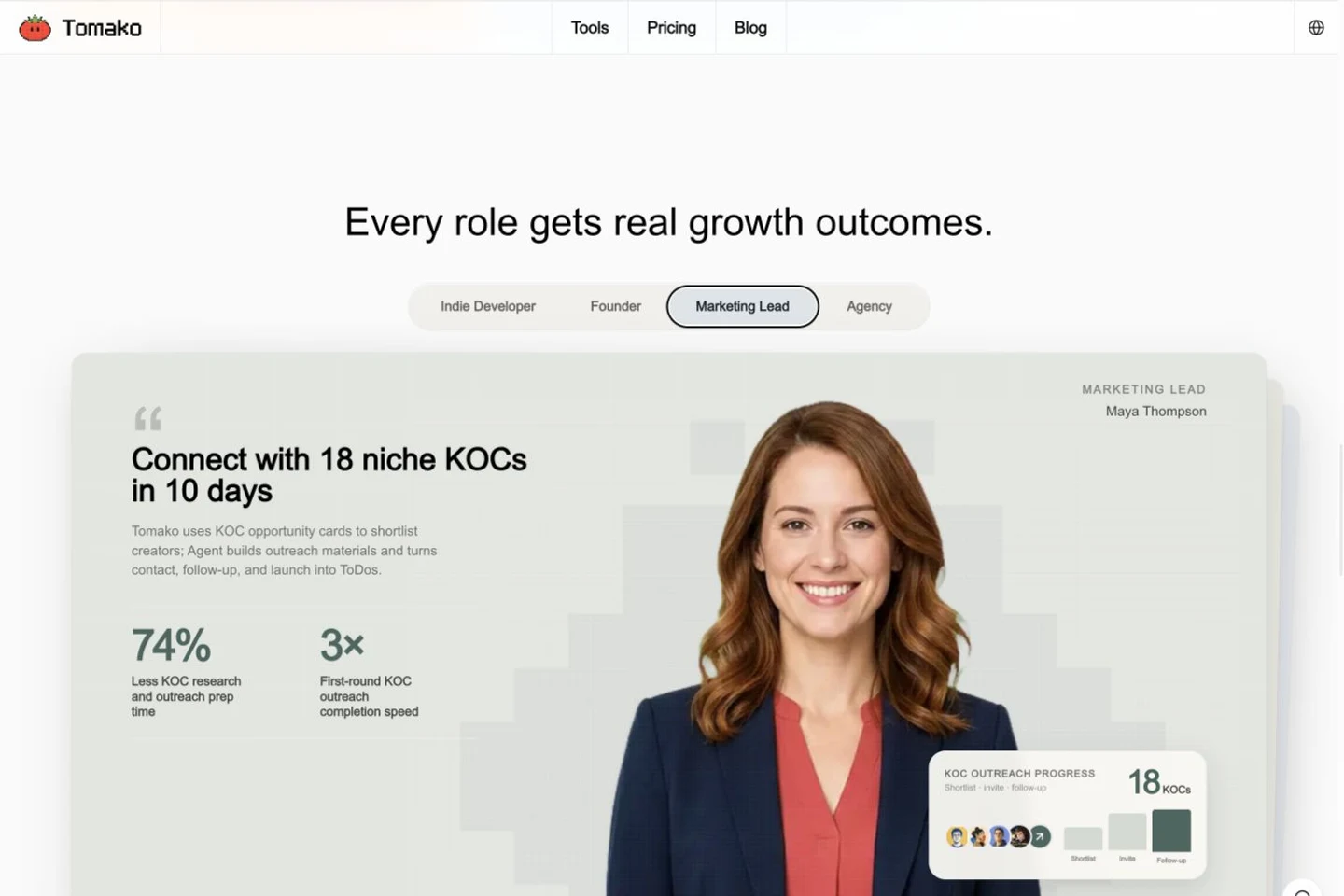
Its AI monitors creator and market signals, surfaces creator leads, and helps teams turn those opportunities into KOL/KOC shortlists. It can then prepare outreach materials and convert contact, follow-up, and campaign-launch work into actionable ToDos.
Source: Tomako's public product page, captured August 28, 2026. The image demonstrates the intended KOC workflow. The example identity and performance figures are demo content, not independently audited campaign results.
That distinction matters. Many tools are good at returning profiles but leave the team to coordinate everything that happens next. Tomako focuses on moving from an identified creator opportunity to an organized set of actions.
Creator work also sits inside a broader AI CMO workspace. A creator partnership can therefore connect with related content, SEO, PR, community, and campaign work rather than remaining isolated in a separate dashboard.
Pros
Monitors creator signals and surfaces creator leads
Supports KOL/KOC shortlisting
Prepares outreach materials
Turns contact and follow-up work into ToDos
Connects influencer activity with other growth work
Suitable for small teams managing several marketing channels
Cons
Public pages do not currently document the size of its creator database
Audience-quality scoring and fake-follower detection are not publicly confirmed
Creator-level ROI attribution should be verified before purchase
Teams should confirm current product availability and plan limits
Ideal use case
A lean growth team wants to identify niche creators, prepare a shortlist, develop outreach materials, and keep follow-ups moving without separating influencer work from the rest of its marketing plan.
Tomako is less compelling if your only requirement is a massive searchable database or a specialist fraud-auditing product. In that case, a dedicated discovery or audience-analysis platform may be the better first purchase.
Best for: Ecommerce teams that want broad self-serve discovery without immediately buying an enterprise platform.
How to find creators: Set the social network and target market first, then add creator size, niche terms, audience location, engagement, activity, and brand-collaboration filters. Review the first 20 results and save only profiles you would really contact before consuming more profile or email credits.
Its entry pricing is more transparent than many enterprise products. The Essentials plan started at $299 per month when billed annually at the time of review, with limits on opened profiles, email unlocks, tracked creators, and seats.
The important detail is not just the starting price. It is how quickly your team will consume those allowances. Broad prospecting can use profile and contact credits faster than expected.
Pros
Broad public-profile coverage
Audience analysis before outreach
Transparent entry pricing
Shopify integration
Discovery-to-tracking workflow
Free trial available
Cons
Profile and email limits require planning
Costs rise with creator volume and team size
Strongest fit is ecommerce
Teams still need a clear human vetting process
Ideal use case
A Shopify brand runs recurring Instagram, TikTok, or YouTube campaigns and wants to replace manual creator research and spreadsheet-based content tracking.
3. HypeAuditor
Best for: Brands and agencies that place audience quality, fraud analysis, and market research ahead of outreach volume.
How to find creators: Search from a real campaign topic and audience, then narrow by market, creator tier, demographics, growth pattern, authenticity, and recent commercial content. Record the evidence behind every pass or fail instead of treating one score as the decision.
HypeAuditor is the platform I would examine when creator vetting is the main bottleneck.
It emphasizes audience demographics, account-quality analysis, suspicious growth, discovery filters, campaign tracking, and competitive research. Its Basic plan started at $299 per month when billed annually at the time of review, while more advanced functionality moved into custom-priced tiers.
The buying question is whether your team needs that depth continuously. For an occasional campaign, the price may be hard to justify. For an agency evaluating hundreds of creators, avoiding a few bad partnerships can cover a meaningful portion of the cost.
Pros
Strong audience-quality focus
Fraud and suspicious-activity analysis
Market and competitor research
Large creator database
Public starting price
Cons
Advanced features require higher plans
Report and usage limits may affect cost
More analytical depth than a small campaign needs
Outreach operations may not be the primary strength
Ideal use case
An agency needs to validate creator recommendations before presenting them to clients and wants an audit trail behind each recommendation.
4. GRIN
Best for: DTC brands that want AI to coordinate routine creator-program work while people retain approval.
How to find creators: Give Gia or the discovery workflow a narrow campaign brief, inspect why each creator was suggested, approve a small shortlist, and continue through outreach and activation with human checkpoints. Test whether the workflow saves work on your category—not on the vendor's showcase campaign.
GRIN places its Gia AI operator at the center of creator discovery, outreach, activation, and retention. Its public site listed paid plans starting at $200 per month at the time of review.
The interesting part is not simply that GRIN uses AI. It is the attempt to move AI from “suggest some influencers” into an operational role: preparing work, coordinating actions, and asking staff to approve important decisions.
I would test this with a real campaign brief. Ask the platform to identify candidates, explain the matches, prepare outreach, and show where manual review is still required.
Pros
End-to-end DTC workflow
AI-supported creator operations
Human approval checkpoints
Ecommerce-oriented use cases
Lower published entry point than many enterprise tools
Cons
Teams should validate creator coverage in their specific market
DTC positioning may be less useful for B2B campaigns
AI recommendations still require audience and brand review
Total cost may increase with program scale
Ideal use case
A DTC team wants to run an always-on creator program without building a large influencer operations department.
5. Shopify Collabs
Best for: Shopify merchants launching a straightforward creator affiliate or gifting program.
How to find creators: Recruit through creator applications, direct invitations, or the available Collabs network, then qualify candidates for product fit before issuing gifts, affiliate links, or discount codes. It is an activation route, not a substitute for deep open-web audience research.
Shopify Collabs is not the deepest creator intelligence platform in this comparison. Its value comes from keeping creator applications, affiliate links, discount codes, gifting, sales attribution, commissions, and payments close to the store.
The app is free to install. A 2.9% processing fee may apply to automatic commission payments, and availability depends on the merchant’s Shopify plan and region.
If the immediate objective is “recruit creators and pay commission on Shopify sales,” Collabs may be enough. If the main risk is fake engagement, audience mismatch, or cross-channel measurement, you will probably need additional tools.
Pros
Low software entry cost
Native Shopify sales attribution
Affiliate links and discount codes
Gifting and commission workflows
Automatic creator payments
Cons
Built specifically around Shopify
Limited independent audience vetting
Less suitable for complex brand-awareness programs
Processing fees can grow with sales volume
Ideal use case
A smaller Shopify merchant wants to test its first structured creator affiliate program without committing to enterprise software.
6. Upfluence
Best for: Established ecommerce teams that want modular discovery, outreach, affiliate management, payments, and analytics.
How to find creators: Turn the brief into topic, audience, platform, size, and market filters, then save candidates into the campaign or relationship workflow. Ask the demo team to show the exact path from one search result to contact, product seeding, affiliate tracking, payment, and reporting under the quoted modules.
Upfluence organizes its offering around modules for finding creators, scaling programs, and automating parts of the workflow. It also provides ecommerce integrations, CRM functionality, outreach, payments, analytics, and API access.
Pricing is customized according to modules, team size, and activity volume. Its public pricing information describes a fixed platform fee rather than a percentage of sales and indicates a minimum 12-month commitment.
The modular approach can be useful, but it makes a complete written quote essential.
Ask which creator reports, contact credits, email volume, users, integrations, onboarding services, and support levels are included. A low headline price is not helpful if the workflow you need requires several additional modules.
Pros
Broad ecommerce workflow
Modular product structure
Affiliate and payment functionality
Ecommerce integrations and API
Fixed fee rather than a percentage of sales
Cons
Pricing is not publicly transparent
Annual commitment
Trial access is sales-led
Module boundaries can complicate cost estimates
Ideal use case
An established ecommerce team wants to consolidate creator discovery, affiliate operations, outreach, and payments into a more connected system.
7. Sprout Social Influencer Marketing
Best for: Social media teams already using Sprout that want influencer activity inside a familiar system.
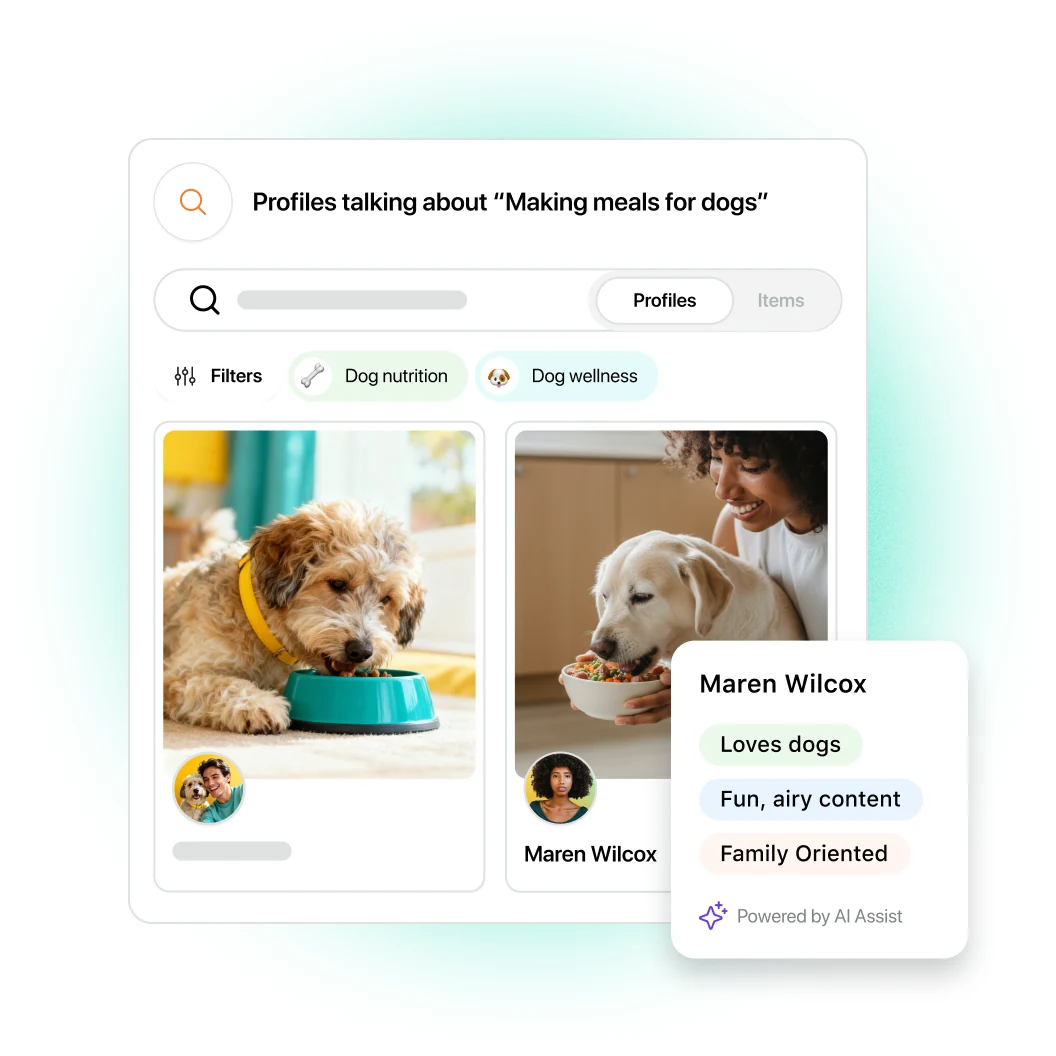
How to find creators: Start with a topic the target audience discusses, inspect the matching content and creator context, then narrow with brand-fit and brand-safety signals before shortlisting. This is more useful than beginning with follower count alone.
Its strongest argument is consolidation. Influencer campaigns can sit alongside a broader social media management process instead of becoming another disconnected tool.
Sprout offers several influencer marketing packages, but pricing is provided through account teams. Some capabilities use credits, so expected campaign volume should be part of the purchasing discussion.
Source: Sprout Social's public creator-discovery page, captured September 1, 2026. The image demonstrates the public workflow; it does not independently prove match quality or campaign results.
Pros
Integrated social and influencer workflows
Brand-safety capabilities
Collaboration and reporting
Logical fit for current Sprout customers
AI-assisted discovery
Cons
Influencer pricing requires a quote
Credit-based services need capacity planning
May be unnecessarily broad for a small creator-only team
Value depends partly on using the wider Sprout ecosystem
Ideal use case
A social media department wants creator campaigns connected with its existing publishing, listening, collaboration, and reporting processes.
8. CreatorIQ
Best for: Global brands and agencies that require governance, integrations, payment operations, and portfolio-level reporting.
How to find creators: Translate the campaign brief into reusable discovery criteria, search the enterprise creator network and existing relationship records, then route candidates through permissions, approvals, brand-safety review, and regional ownership before outreach.
CreatorIQ is designed for a very different buying environment from Shopify Collabs.
Its public materials describe enterprise creator discovery, campaign management, payments, integrations, reporting, and measurement across large programs. Pricing is not publicly disclosed and requires a custom proposal.
The platform makes the most sense when the complexity is real: multiple markets, many users, agency partners, security reviews, payment workflows, and executive reporting.
A small team should avoid buying enterprise governance before it has an enterprise problem.
Pros
Enterprise governance
Global campaign operations
Reporting and integration depth
Creator payment support
Suitable for complex team structures
Cons
Pricing is not public
Procurement and implementation may take longer
Likely excessive for lean programs
Teams may pay for capabilities they are not ready to use
Ideal use case
A multinational brand coordinates creator programs across markets, business units, agencies, currencies, and approval structures.
My framework for choosing the right platform
The most reliable way to choose a platform is to make every vendor solve the same problem.
Step 1: Define one real campaign
Prepare a short brief containing:
Target customer and market
Campaign objective
Preferred channels
Creator niche and audience size
Required deliverables
Budget or commission model
Timeline
Success metric
Content usage requirements
Do not let a vendor demonstrate an abstract beauty campaign if you sell B2B software or a niche consumer product.
Step 2: Choose the primary job
Decide which problem matters most:
Creator discovery
Audience quality and fraud analysis
Creator relationship management
Affiliate commerce and attribution
Enterprise governance and reporting
Cross-channel opportunity planning and execution
A platform can perform several jobs, but one usually determines whether the purchase succeeds.
Step 3: Run the same shortlist test
Give each vendor the same brief and request 20 creators.
For every shortlist, record:
Relevant creators found
Obviously poor matches
Audience-quality concerns
Available contact information
Time required
Manual corrections
Quality of the match explanation
Export and collaboration options
This reveals the difference between database size and usable discovery.
Step 4: Test the handoff after discovery
Select three creators and simulate the next steps without sending real outreach.
Can you:
Prepare a personalized message?
Assign an owner?
Track a reply?
Record product delivery?
Manage content approval?
Store usage rights?
Track affiliate or campaign results?
Schedule the next follow-up?
Discovery demos often look impressive because they avoid this operational middle.
Then divide that total by the number of creators your team would realistically approve.
That is your qualified shortlist cost.
Step 6: Define a 90-day success test
Before signing an annual contract, decide what should improve during the first 90 days:
Time to produce a qualified shortlist
Percentage of shortlisted creators approved
Outreach response rate
Creator activation rate
Time from brief to campaign launch
Attributed sales or qualified leads
Reusable UGC produced
Staff hours saved
If neither your team nor the vendor can define success, the platform is not ready for procurement.
How AI is changing influencer marketing platforms
AI is useful when it removes repetitive research and coordination. It is less useful when it hides weak data behind a confident recommendation.
The strongest applications include:
Translating a natural-language brief into creator criteria
Monitoring creator and market signals
Summarizing a creator’s content history
Identifying unusual audience patterns
Explaining why a creator matches a campaign
Drafting personalized outreach
Turning campaign activity into tasks
Summarizing performance anomalies
The weaker use case is pretending that one opaque “brand fit” score can make the final decision.
AI does not know every cultural nuance, contractual concern, reputational risk, or private campaign result. It can narrow the field and organize the work. A person should still approve the creator, message, commercial terms, and final content.
This is where Tomako’s broader workflow becomes relevant. A creator partnership can produce UGC, SEO mentions, paid-social assets, community discussions, and PR opportunities. Connecting those activities can be more useful than adding another isolated search dashboard.
Common platform-buying mistakes
Buying for database size
Ask how many creators match your actual market, channel, audience, topic, and minimum activity level. The headline database number is rarely the usable number.
Treating engagement rate as audience quality
Engagement rate is one signal. Geography, follower growth, comment quality, content relevance, and sponsored-post performance matter too.
Ignoring what happens after discovery
A tool that identifies creators but leaves contact research, outreach, approvals, and follow-up to your team has solved only part of the workflow.
Personalization cannot rescue a weak match. Approve the shortlist and message strategy before increasing send volume.
Using AI recommendations without explanations
Ask why each creator was recommended. If the platform cannot show the criteria or evidence behind the match, your team cannot audit the result.
Forgetting disclosure and content rights
Material brand relationships should be disclosed clearly and placed where audiences will notice them. The FTC’s influencer disclosure guidance says disclosures should be hard to miss and included with the endorsement itself.
Contracts should also define:
Organic content usage
Paid advertising rights
Editing permissions
Exclusivity
Usage duration
Geographic territory
Cancellation terms
These details can affect campaign cost more than the platform subscription.
Frequently asked questions
What is the best influencer marketing platform for a small business?
For a Shopify merchant focused on affiliate sales, Shopify Collabs is a practical starting point. Teams needing broader discovery and audience analysis should compare Modash and HypeAuditor. Teams that want creator discovery, outreach preparation, and follow-up connected with wider marketing work can evaluate Tomako.
How much do influencer marketing platforms cost?
Entry plans in this comparison range from free-to-install to approximately $200–$300 per month, while enterprise products generally use custom pricing. Total cost can also include annual commitments, seats, profile reports, contact credits, emails, payment fees, onboarding, and integrations.
Which influencer marketing platform features matter most?
Prioritize relevant creator coverage, audience-quality data, reliable contact information, outreach workflow, content tracking, collaboration, and measurement. The correct order depends on whether discovery, vetting, campaign operations, commerce attribution, or governance is your main bottleneck.
Can AI choose influencers automatically?
AI can generate candidates, analyze public data, summarize content, explain possible matches, and prepare outreach. A person should still approve audience fit, brand safety, creative quality, commercial terms, disclosure requirements, and content rights.
How should I measure influencer marketing ROI?
Choose metrics that match the campaign objective. Ecommerce teams can measure contribution margin, new customers, and affiliate sales; awareness teams can track qualified reach, brand lift, content performance, and reusable UGC; B2B teams can focus on leads and pipeline influence.
Is an influencer platform the same as a creator marketplace?
No. A marketplace connects brands with creators who joined that network, while a discovery platform may index a broader set of public profiles. Marketplaces simplify activation; broader databases can provide more coverage but often require additional outreach and vetting.
Do I need a platform to run an influencer campaign?
Not always. A small pilot with five known creators can run through a spreadsheet, email, tracked links, and a clear contract. A platform becomes useful when repeated research, coordination, and cross-channel measurement cost more than the software and implementation.
Final verdict
There is no universal winner among the best influencer marketing platforms because the products solve different operating problems.
Choose Shopify Collabs for a simple Shopify affiliate program. Consider Modash for self-serve ecommerce discovery, HypeAuditor for deeper audience vetting, GRIN for AI-supported DTC operations, Upfluence for modular ecommerce workflows, Sprout Social for integrated social operations, and CreatorIQ for enterprise governance.
Consider Tomako when you want creator marketing to begin with opportunity discovery and continue through shortlisting, outreach preparation, and follow-up—without separating that work from content, SEO, PR, and other growth activities.
The final decision should come from one controlled trial using your own campaign brief. Count qualified matches, manual corrections, team hours, workflow gaps, and total cost.
That evidence will tell you more than another database-size claim.
Ricky works across influencer marketing, SEO/GEO, and AI-enabled growth workflows, with experience in prompt engineering and development. Her focus goes beyond visibility: connecting research, content production, search presence, and execution into a workflow a team can actually use. On the Tomako Blog, she writes about reusable research methods, content and search strategy, and how AI can help teams move concrete growth work forward.
 Ricky
Ricky