The short answer: choose influencer marketing tools by the job that is slowing you down. Start a first campaign with native search, a spreadsheet, email, and tracked links; test Modash or HypeAuditor when discovery and audience vetting are slow; use Shopify Collabs for a Shopify affiliate program; compare GRIN or Upfluence for ongoing DTC operations; and evaluate Tomako when creator leads are easy to find but hard to turn into outreach and follow-up.
This guide compares those routes, shows how each product finds creators, and gives you a 30-day trial plan. The goal is a small stack that carries one campaign brief from shortlist to measurable result without losing context between tools.
Editorial method: Product capabilities and public prices were checked on August 28, 2026. I did not test every paid plan under identical account conditions, and no vendor paid for inclusion. Custom quotes, private integrations, and vendor performance claims should be verified in your own trial.
Key takeaways
Buy for your bottleneck, not for the number of features on a pricing page.
Most teams need one system of record and, at most, one specialist tool for the hardest stage.
Measure handoff loss: the fields, decisions, files, and history that disappear between tools.
A large creator database does not replace audience-quality checks or a reliable outreach process.
AI is useful for narrowing, summarizing, drafting, and organizing; people still own fit, safety, terms, rights, and final measurement.
Run every trial with the same campaign brief and score the same outputs.
The short answer: start with a minimum viable stack
If you want the recommendation before the method, use this route:
First campaign or fewer than 20 creator relationships: use native social search, a spreadsheet, email, and tracked links or codes.
Discovery is slow: test Modash for broad self-serve search or HypeAuditor when audience vetting is the bigger risk.
You run a Shopify affiliate program: start with Shopify Collabs before buying a broader suite.
You manage a repeat DTC program: compare GRIN and Upfluence on product seeding, outreach, affiliate tracking, payments, and limits.
Influencer work must sit inside social operations: compare Sprout Social; for multi-market governance, add CreatorIQ or Traackr to the shortlist.
You already find creator opportunities but lose them during follow-up: evaluate Tomako as the execution layer that keeps the shortlist reason, outreach material, owner, and next action together.
For a first or occasional campaign, the minimum viable stack is usually only four things:
A source of creator candidates: native platform search, a creator marketplace, customer data, or a discovery product.
One system of record: a spreadsheet, CRM, or influencer platform that stores why each creator was selected, who owns the relationship, and what happened next.
A communication channel: email or in-platform messaging with follow-up history.
A measurement method: tracked links, codes, platform analytics, post-level metrics, or a documented awareness study that matches the campaign objective.
Add specialist software only when a recurring problem is expensive enough to justify it. Examples include unreliable audience data, hundreds of monthly creator conversations, complex product seeding, global payments, content approvals across clients, or multi-brand governance.
The contrarian point is simple: an all-in-one platform is efficient only if the team uses the shared record. If everyone exports to CSV and returns to Gmail and Sheets, it has become an expensive database.
Influencer marketing tools compared by job
This table is a routing tool, not a universal ranking. “Public price” means information visible on the vendor's site at the time of review; usage limits and contract terms can change.
Tool
Best for
Main job
Public price
AI role
Watch for
Tomako
Lean cross-channel teams
Opportunities to outreach tasks
Tiered plans; check current page
Opportunity discovery and work preparation
Verify specialist data depth needed for your program
Modash
Ecommerce discovery and operations
Search, CRM, tracking, payments
From $299/mo annual; $399 monthly
AI creator search
Profile, contact, tracking, and seat limits
HypeAuditor
Audience and fraud analysis
Vetting and market intelligence
Custom quote
Search and audience analysis
Depth may exceed occasional-campaign needs
GRIN
DTC creator programs
Relationships, activation, commerce
Free plan; paid from $200/mo
Gia operates defined work
Credit use and ecommerce fit
Shopify Collabs
Shopify affiliate programs
Recruitment, codes, commissions
Free to install; 2.9% payment fee
Workflow automation, not the core pitch
Shopify dependency and affiliate focus
Upfluence
Modular ecommerce programs
Discovery through payments
Custom quote
Jaice supports search and outreach
Modules, contract, and total quote
Sprout Social
Social-first marketing teams
Creator plus social workflow
Custom quote
Semantic discovery and brand-safety analysis
Influencer product packaging and credits
CreatorIQ
Global brands and agencies
Enterprise governance and measurement
Not publicly disclosed
Discovery, recommendations, monitoring
Implementation and enterprise complexity
Traackr
Mature global programs
Governance, benchmarking, spend
Custom quote
Verify in demo for your use case
Sales-led procurement and fit for smaller teams
Tomako: best for connecting creator opportunities with action
Tomako belongs in this guide for a different job. I would not use this article to position it as a substitute for a broad searchable creator database or an independent audience-quality audit. If database coverage or deep vetting is your bottleneck, start with a specialist such as Modash or HypeAuditor and test it against a real brief.
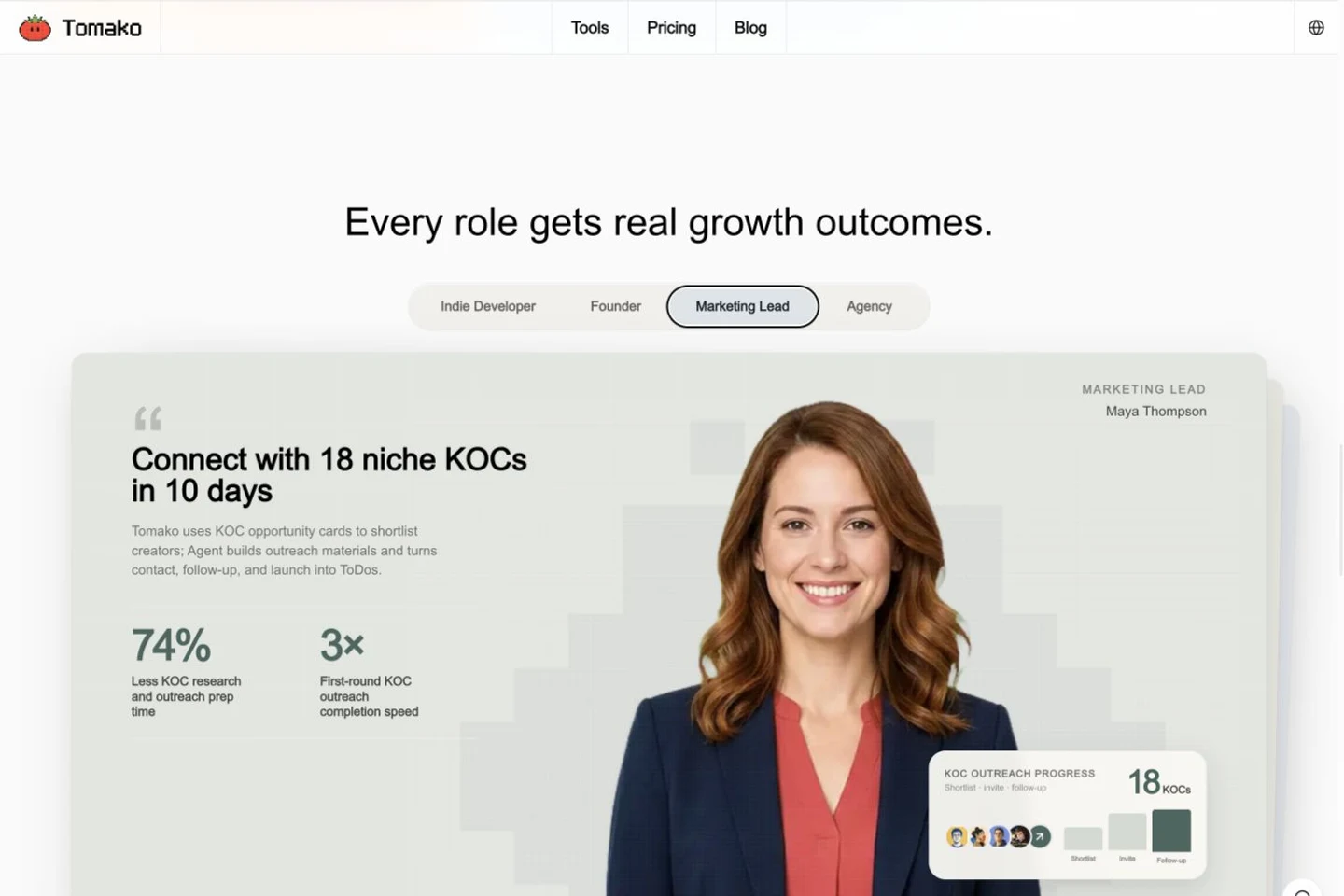
Tomako's role is the execution layer around creator opportunities: its public product page shows KOC opportunity cards moving into creator shortlists, outreach materials, and contact, follow-up, and launch ToDos.
That influencer workflow sits beside content, SEO, PR, and community work. For a lean team, the value is context: a creator partnership can remain connected to the broader growth opportunity instead of becoming a separate spreadsheet.
Pros
Surfaces creator leads and KOC opportunity cards
Supports KOL/KOC shortlisting and outreach preparation
Turns contact and follow-up work into explicit tasks
Connects creator work with wider marketing execution
Cons
Public pages do not state a creator-database size
Public pages do not currently verify fake-follower detection or specialist audience scoring
Teams needing deep creator-level attribution or integrations should verify those requirements directly
Ideal use case: A small marketing team wants to move from creator signal to shortlist, outreach material, and follow-up without isolating the work from the rest of its growth plan. Review the current Tomako plans and confirm the exact creator-data requirements in your workflow.
Source: Tomako's public product page, captured August 28, 2026. This image demonstrates the intended KOC workflow. The example identity and performance figures shown on the product page are demo content, not independently audited campaign results.
Modash and HypeAuditor: best when discovery or vetting is the bottleneck
Modash combines broad discovery, audience analytics, CRM, content tracking, payments, and Shopify support. Essentials was $299 per month annually or $399 month to month when reviewed. Best for: ecommerce teams moving from discovery into operations. Pros: public pricing and broad search. Cons: profile, contact, tracking, and seat allowances must match real monthly usage.
HypeAuditor emphasizes audience quality, suspicious activity, demographics, market analysis, and vetting; pricing requires sales. Best for: brands where a bad audience match is costly. Pros: deep multi-network analysis. Cons: occasional campaigns may not use enough depth to justify a custom package.
How to use them: In Modash, start with the platform, market, niche, creator size, and audience filters from one live brief, then inspect the first 20 profiles and save only creators you would genuinely contact. In HypeAuditor, begin with the same brief, then use audience geography, growth patterns, authenticity signals, and recent sponsored content to explain why each candidate stays or goes. The result should be a five-person shortlist with a written reason for every name—not a CSV of hundreds.
For either product, do not accept a proprietary score as a final verdict. Use it to decide what to inspect. Our manual fake-influencer audit shows how to review identity, audience fit, interaction quality, content history, and first-party evidence without turning one score into a public accusation.
GRIN, Upfluence, and Shopify Collabs: best for ecommerce programs
GRIN covers creator relationships, outreach, activation, reporting, and commerce. It has a free plan; paid plans start at $200 per month. Best for: ongoing DTC programs. Pros: a public entry path and relationship workflow. Cons: credits and active-creator limits must be mapped to sourcing, gifting, and reporting volume.
Upfluence offers modular discovery, recruitment, campaigns, affiliate tracking, payments, and analytics at a custom quote. Best for: established ecommerce teams assembling a broader program. Pros: lifecycle breadth. Cons: module scope, contract, services, and limits must be clarified during procurement.
Shopify Collabs supports recruitment, applications, gifts, affiliate links and codes, sales tracking, and commissions inside Shopify. It is free to install; commission payments carry a published 2.9% processing fee, with possible currency fees. Best for: Shopify affiliate or ambassador programs. Pros: low entry cost. Cons: affiliate focus and Shopify dependency.
How to use them: Use GRIN or Upfluence when you need to turn a saved creator into outreach, product seeding, an affiliate relationship, and repeat campaign history. Use Shopify Collabs when the workflow starts with a creator application or recruitment invitation and ends with Shopify links, codes, sales, and commission payments. Test the complete path with three creators before comparing feature counts.
Sprout Social, CreatorIQ, and Traackr: best for coordination and governance
Sprout Social Influencer Marketing connects creator discovery and campaigns with wider social operations; pricing is sales-led. Best for: teams already managing social publishing, listening, and reporting at scale. Pros: connected social workflow. Cons: package, brand-safety credits, and total price require confirmation.
CreatorIQ combines discovery, CRM, campaigns, payments, measurement, APIs, permissions, and multi-brand operations; pricing is undisclosed. Best for: global brands and agencies. Pros: enterprise governance and integration depth. Cons: small teams may pay for implementation capacity they do not need.
Traackr focuses on creator management, benchmarking, spend control, and global consistency at a custom quote. Best for: mature programs prioritizing standardization. Pros: program-level control. Cons: sales-led enterprise scope is a poor default for a first campaign.
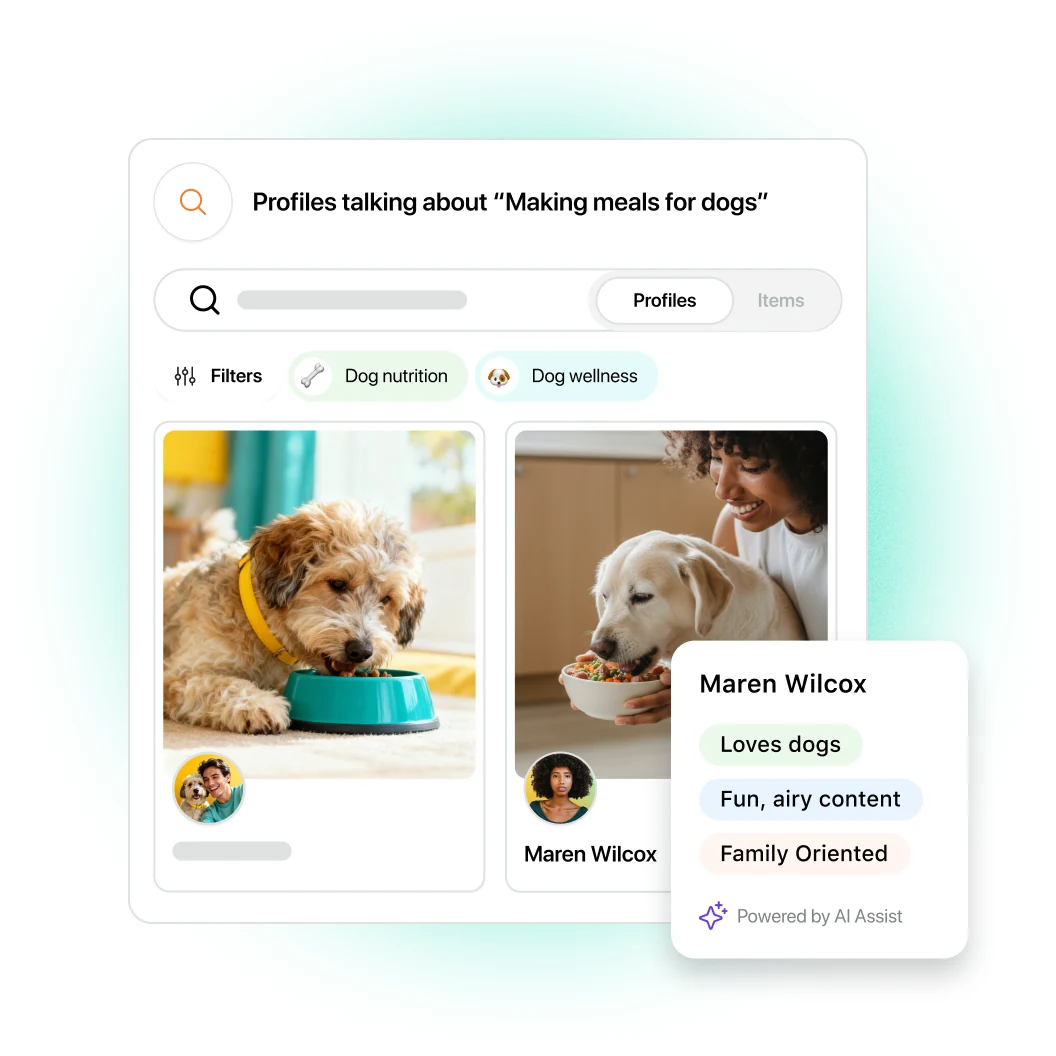
How to use them: In Sprout Social, start from a topic your audience discusses, review the matching content and creator context, then narrow with brand-fit and safety signals before adding a creator to a campaign. Use CreatorIQ or Traackr when the same shortlist must also carry permissions, approvals, spend controls, and reporting standards across markets or clients.
Source: Sprout Social's public creator-discovery page, captured September 1, 2026. The image demonstrates a topic-led product workflow; it does not independently prove match quality or campaign results.
The metric most buying guides miss: handoff loss
Most comparison tables ask whether a feature exists. I ask what survives the handoff.
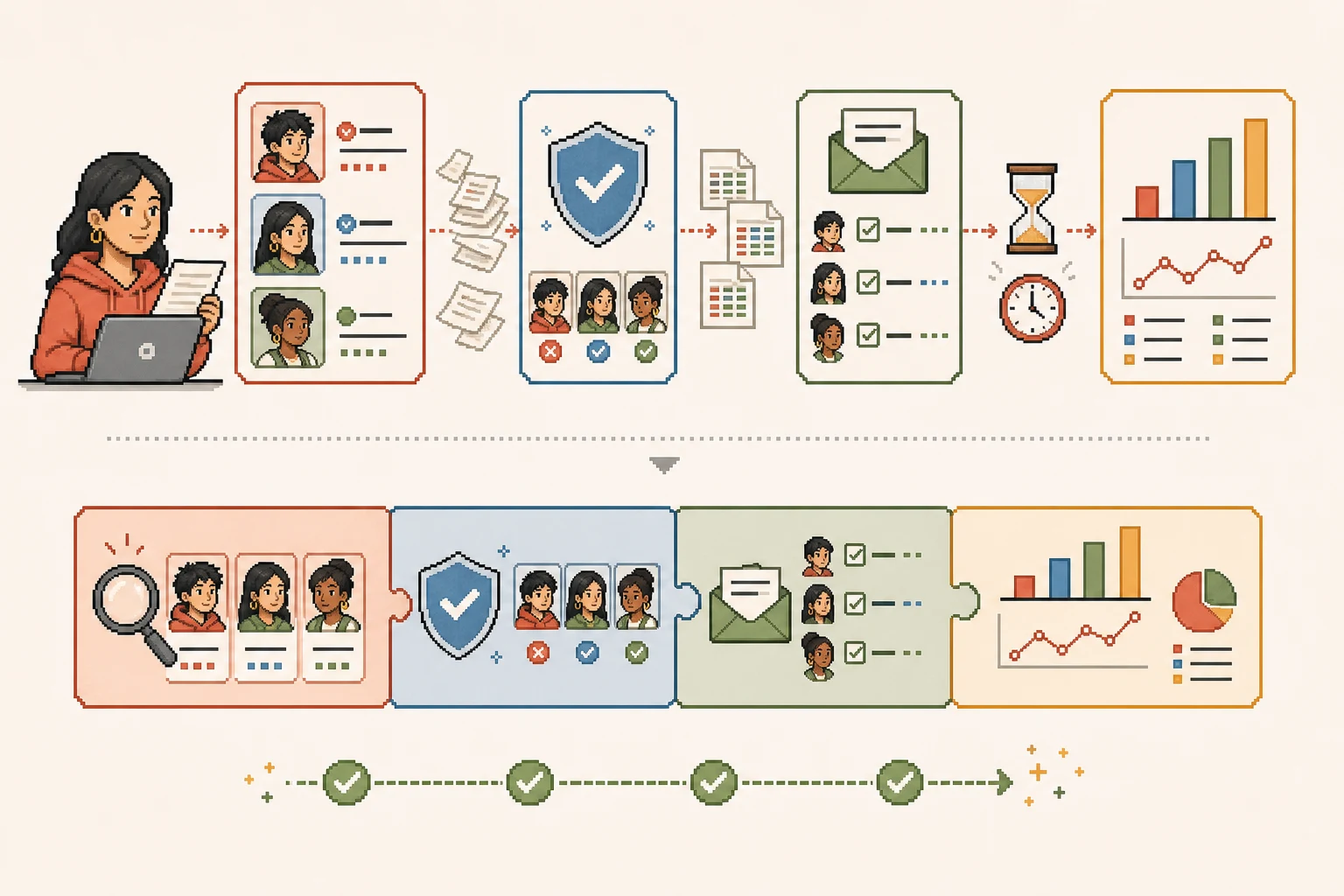
Suppose a discovery tool returns 40 candidates. Your analyst selects 10, adds notes, and exports a CSV. The outreach owner rebuilds the list in a CRM, drops two notes, cannot see the audience-risk flag, and sends a generic sequence. Three creators reply. A project manager copies the replies into another board, while campaign results later live in an affiliate dashboard.
Every tool worked. The system failed.
Handoff loss checklist
Does the reason for selecting a creator travel with the record?
Do audience concerns and brand-safety notes remain visible before outreach?
Can the outreach owner see the brief, status, last contact, and next action?
Do content approvals, usage rights, payment terms, and disclosure requirements have owners?
Does the final report update the relationship history for the next campaign?
If two products cover the same data but neither preserves the decisions between stages, consolidation may save more time than another AI feature.
How I build a tool stack by team maturity
Stage 1: one campaign, fewer than 20 creators
Use native search, customer and community signals, a simple system of record, email, and campaign-specific tracking. Add a marketplace or free affiliate product when it removes a real sourcing or payment constraint.
At this stage, process discipline matters more than enterprise software. Write the brief, record why each creator fits, set one owner, and define the outcome before outreach.
Stage 2: repeatable program, 20 to 100 active relationships
Add a discovery or vetting product if research is consistently slow. Move relationship history out of scattered campaign sheets. Connect outreach, content tracking, links or codes, and reporting to the same creator record where possible.
This is where Tomako, Modash, GRIN, HypeAuditor, Shopify Collabs, or Upfluence can enter the shortlist for different reasons. Choose based on the bottleneck, not on who has the widest feature page.
Stage 3: multi-market, multi-brand, or agency operation
Permissions, standardized briefs, client approvals, creator payments, content rights, data export, API access, and reporting definitions become first-class requirements. CreatorIQ, Traackr, Sprout Social, or a carefully scoped enterprise stack may be justified.
Do not jump to this stage because the demo looks polished. Enterprise capacity is valuable only when your organization has enterprise coordination problems.
A 30-day test for any influencer marketing tool
Do not let each vendor choose a different showcase campaign. Create one test brief and give it to every shortlisted product.
30-day trial scorecard
Freeze one brief and record the current manual baseline.
Time how long each tool takes to find five qualified creators.
Move the same five candidates into outreach and approval.
Count every manual copy, missing field, and delayed decision.
Model the full-year cost and test whether useful relationship data can leave the product.
Week 1: freeze the brief and baseline
Record:
Target audience, market, platform, creator tier, and content format
Campaign objective and primary metric
Exclusions, brand-safety concerns, disclosure needs, and content-rights requirements
Current manual time for discovery, vetting, outreach, reporting, and handoffs
Expected monthly creator volume and number of seats
Week 2: build the same shortlist
Ask each product to produce candidates for the same brief. Review the first 20 results and calculate:
Qualified shortlist yield = candidates you would contact ÷ candidates reviewed
Also record time to the first five qualified creators, contact availability, duplicate profiles, stale records, and how clearly the tool explains each match.
Week 3: run the handoff
Move five approved creators into outreach and campaign preparation. Test whether notes, owners, contact history, brief details, tasks, approvals, and files remain connected.
Use a real outreach draft, but do not send it merely to test software. When the campaign is authorized, our guide to negotiating with influencers can help structure scope, fees, rights, revisions, and communication.
Week 4: model cost and exit
Calculate the cost at expected usage, not demo usage:
Then test your exit path. Can you export creator records, notes, campaign history, content links, rights, and reporting data in a useful format? A tool that traps the relationship history creates switching cost from day one.
Trial metric
What to record
Why it matters
Shortlist yield
Qualified creators ÷ profiles reviewed
Tests search relevance
First-five time
Minutes to five contactable creators
Tests real research speed
Contactability
Usable contact paths ÷ qualified creators
Tests activation readiness
Handoff steps
Manual copies between shortlist and campaign
Exposes workflow friction
Approval latency
Time from candidate to approved outreach
Exposes coordination cost
Outcome traceability
Results linked to creator and campaign
Tests learning and ROI evidence
Full-year cost
Software, usage, services, fees, and labor
Prevents headline-price bias
How AI changes the stack—and where it should stop
AI is becoming normal in creator software. It can translate a natural-language brief into filters, identify semantically related content, summarize a creator's recent posts, detect unusual patterns, draft personalized outreach, recommend a next task, and compile campaign updates.
Those are useful applications because they reduce search and coordination work. They do not remove accountability.
Keep human approval at these points:
Audience and cultural fit
Brand safety and reputational risk
Creative judgment and product experience
Fees, commissions, exclusivity, and negotiation
Content ownership, licensing, and paid-usage rights
Disclosure and local compliance requirements
Final ROI interpretation and budget decisions
For US-facing campaigns, the FTC says material connections should be disclosed clearly and conspicuously. Free products and other benefits can count as material connections, not only cash payments. A platform may provide fields, templates, or monitoring, but the brand and creator still need a compliant process. This is practical guidance, not legal advice; check the rules that apply to your market and campaign.
Common buying mistakes
Buying a database when outreach is broken
More candidates will not fix a weak offer, generic message, slow approvals, or unclear ownership. Diagnose reply rate and follow-up behavior before adding volume.
Treating database size as usable coverage
A product can index hundreds of millions of profiles and still be weak for your language, market, platform, niche, or creator tier. Test one real brief and measure shortlist yield.
Comparing annual and monthly prices as if they were equal
The lowest displayed monthly number may require annual prepayment. Include contract length, onboarding, credits, seats, overages, payment fees, and services.
Paying twice for the same data
Social suites, influencer platforms, affiliate tools, and CRMs often overlap. Draw the workflow and assign one system of record before procurement.
Measuring engagement without a campaign decision
An engagement report is not automatically influencer marketing ROI. Decide whether the campaign exists to generate awareness, reusable UGC, qualified traffic, sales, leads, retention, or learning. Then choose the tool and metrics.
Automating approval instead of preparation
Use AI to prepare evidence, drafts, and next actions. Keep people responsible for creator selection, risk, commercial terms, rights, and final publication.
Frequently asked questions
What are influencer marketing tools?
Influencer marketing tools are software products that help teams discover and evaluate creators, manage outreach and relationships, coordinate campaigns, track content and sales, handle payments, or report results. Some combine several jobs; others specialize in one stage.
What is the best influencer marketing tool for a small business?
The best starting tool solves the current bottleneck without duplicating the rest of the stack. Shopify merchants focused on affiliates can start with Shopify Collabs; teams needing broader discovery can test Modash or HypeAuditor; lean teams coordinating creator opportunities with wider marketing work can evaluate Tomako.
Public options range from free-to-install products to several hundred dollars per month, while many enterprise products use custom quotes. The real cost also includes profile and contact credits, seats, onboarding, payment fees, integrations, and staff time spent moving data between systems.
Can AI automate influencer marketing?
AI can narrow creator candidates, summarize public content, draft outreach, flag patterns, and organize follow-ups. People should still approve audience fit, brand safety, commercial terms, content quality, usage rights, disclosure requirements, and final measurement decisions.
Do I need an all-in-one influencer platform?
Not always. An all-in-one product is useful when discovery, outreach, campaign operations, and measurement must share one record. A specialist tool can be better when one high-cost problem—such as audience vetting or affiliate attribution—dominates and your existing systems already cover the other stages.
How should I test influencer marketing software?
Give every vendor the same live campaign brief, then measure time to five qualified creators, shortlist yield, contactability, handoff steps, approval latency, outcome traceability, and total cost at your expected usage. Do not compare polished demos built from different examples.
What is the best free influencer marketing tool?
There is no universal best free option. Native platform search, a spreadsheet, and email may be enough for a small first campaign. Eligible Shopify merchants can evaluate Shopify Collabs, which is free to install, but creator commission payments carry a published 2.9% processing fee and possible currency fees.
Which influencer marketing tools work with Shopify?
Shopify Collabs is the most direct Shopify-native option. Modash, GRIN, and Upfluence also promote ecommerce or Shopify workflows, but integrations, credits, supported markets, and plan requirements should be checked against the vendor's current documentation before purchase.
Are influencer marketing tools worth it for small brands?
They are worth paying for when a repeated sourcing, vetting, outreach, tracking, or payment bottleneck costs more than the full software and operating cost. A brand managing fewer than 20 creator relationships may be better served by native search and one disciplined system of record until that bottleneck is measurable.
Choose fewer tools, then make the workflow stronger
If you only remember one thing
Buy for your bottleneck, not the feature count.
Use one system of record and, at most, one specialist tool.
Test every vendor with the same brief and measure handoff loss.
The best influencer marketing tools remove a real constraint and preserve context for the next decision. Start with one brief and one system of record; add a specialist only for a recurring, measurable bottleneck, then run the same 30-day test.
Tomako connects creator opportunities, KOL/KOC shortlists, outreach preparation, and follow-up with wider marketing work. If that matches your bottleneck, see how Tomako organizes the work or compare plans.
Ricky works across influencer marketing, SEO/GEO, and AI-enabled growth workflows, with experience in prompt engineering and development. Her focus goes beyond visibility: connecting research, content production, search presence, and execution into a workflow a team can actually use. On the Tomako Blog, she writes about reusable research methods, content and search strategy, and how AI can help teams move concrete growth work forward.
 Ricky
Ricky